
How to Choose an IP-Rated Outdoor EV Charger Enclosure
IP54 vs IP55 vs IP65 vs NEMA 4X — what the rating really means, which level your site needs, and how to verify a supplier’s claim before you buy.
IP rating is the most misunderstood spec in EV charging
When buyers source an outdoor EV charger enclosure, most look for “IP65” and stop there. That shortcut is exactly where problems start — enclosures that look sealed on the datasheet but leak in heavy rain, or cost extra for protection the site never needed.
An IP (Ingress Protection) rating is two digits, not a single badge. The first digit rates dust, the second rates water. You can’t judge an enclosure by the headline number alone.
The four ratings that matter for outdoor EV charging
| Rating | Protection | Typical fit |
|---|---|---|
| IP54 | Limited dust, splash-proof water | Sheltered wall-mount, carport or canopy |
| IP55 | Limited dust, jet-proof water | Minimum for most outdoor AC charging |
| IP65 | Fully dust-tight, jet-proof water | Exposed pedestals and wall boxes, the standard choice |
| NEMA 4X | Roughly IP66 plus corrosion resistance | Coastal, industrial and high-salt sites |
A useful rule of thumb: if the enclosure is fully exposed to weather, IP65 is your baseline. IP54 saves a little money but only makes sense under a canopy. NEMA 4X is worth it when salt spray or aggressive environments are in play — the “X” means corrosion resistance, which IP ratings don’t cover at all.
How to pick the right level for your site
- Wall-mounted AC box, under a roof or carport — IP54 or IP55 is usually enough.
- Exposed wall box or free-standing pedestal — go IP65; dust and driven rain are both real.
- DC fast-charging cabinet — IP65 on the outer cabinet, plus thermal-management provisions (ventilation or liquid cooling paths), because high power means heat as well as weather.
- Coastal or heavy-industrial site — NEMA 4X or an IP66-rated cabinet with a corrosion-resistant finish.
The step most buyers skip: verifying the IP claim
Here’s the part that separates a supplier who can deliver from one who just prints “IP65” on a page. An IP rating is a tested result, not a design intention. The honest way to confirm it:
- Ask for the IEC 60529 test report — and check it matches the exact model and revision you’re buying.
- Confirm the material certificate and plate thickness, because sealing depends on the gasket, the weld, and the door tolerance holding up over years outdoors.
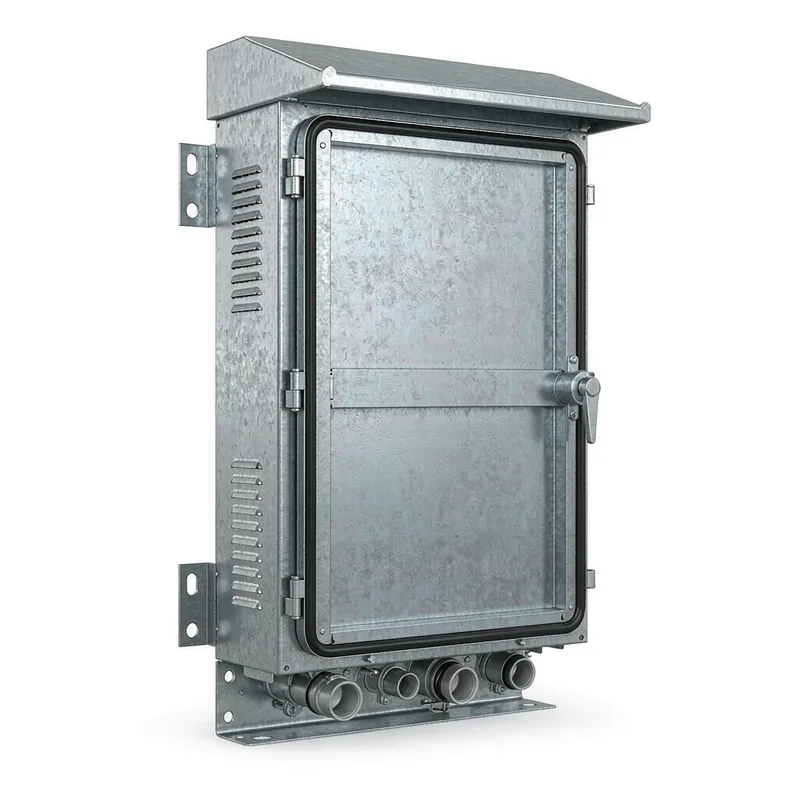
- Look at the sealing design — gasketed doors, drainage, and cable-entry glands — not just the number on the spec sheet.
We say this plainly: we fabricate empty metal enclosures built to your drawings — not populated charging equipment. We’ll quote the enclosure to the IP level you need and support it with the test report for that exact build, but the protection rating of the finished, populated charger is the integrator’s responsibility.
How we build an enclosure that actually holds its rating
Every outdoor enclosure we fabricate goes through a DFM (design-for-manufacturing) review before metal is cut — checking gasket grooves, door tolerances, weld continuity and drainage paths against the target IP level. We can then supply samples in 5–7 days and move to controlled repeat production. No minimum order.
Need an enclosure built to a specific IP level?
Send your STEP, DXF or PDF drawing — we’ll run a DFM review and quote with the test report to back the rating.